


Placebo (n=73)13
0.75mg Oestrogel (n=75)13
1.5mg Oestrogel (n=73)14

Study design (Archer 2003)3
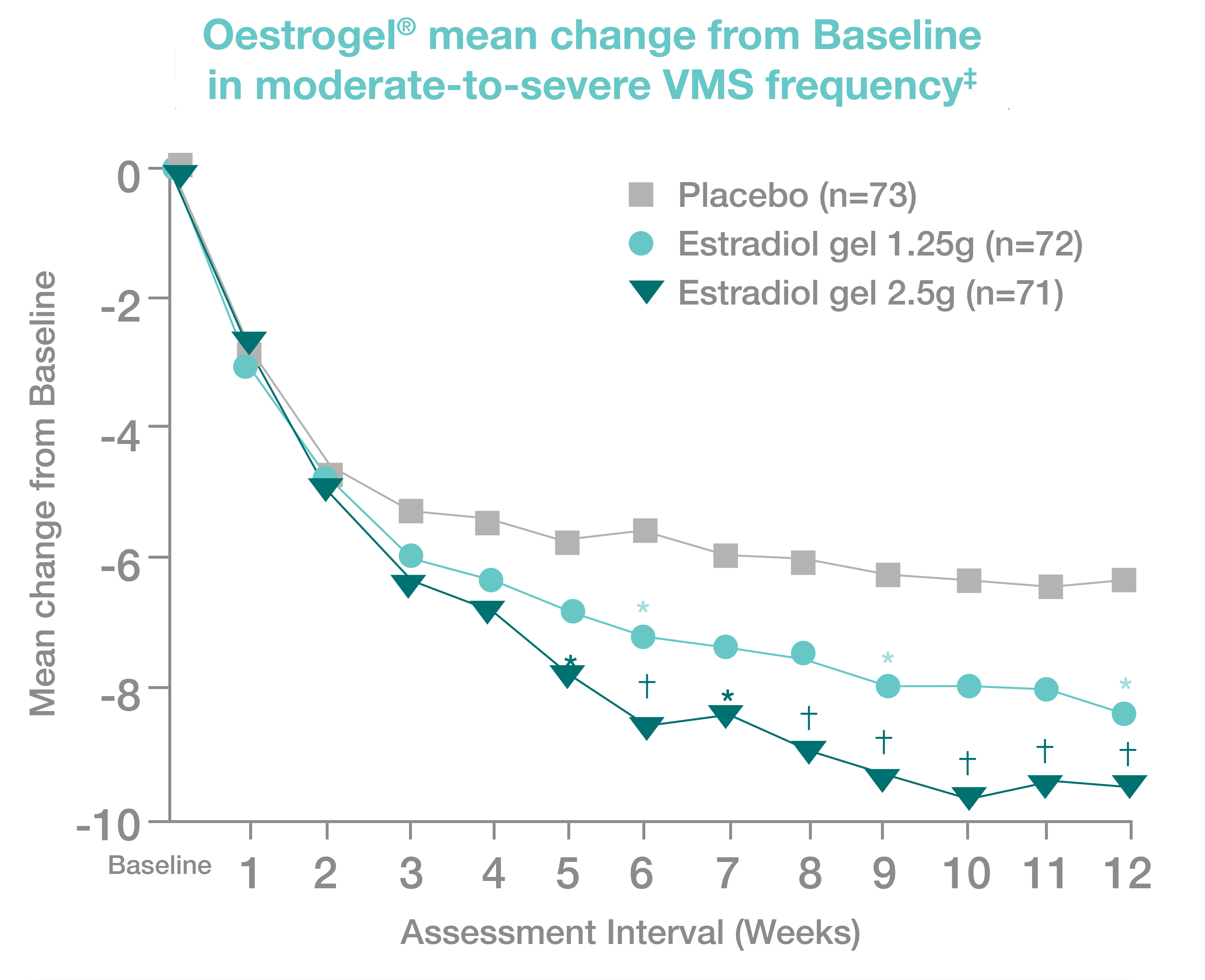
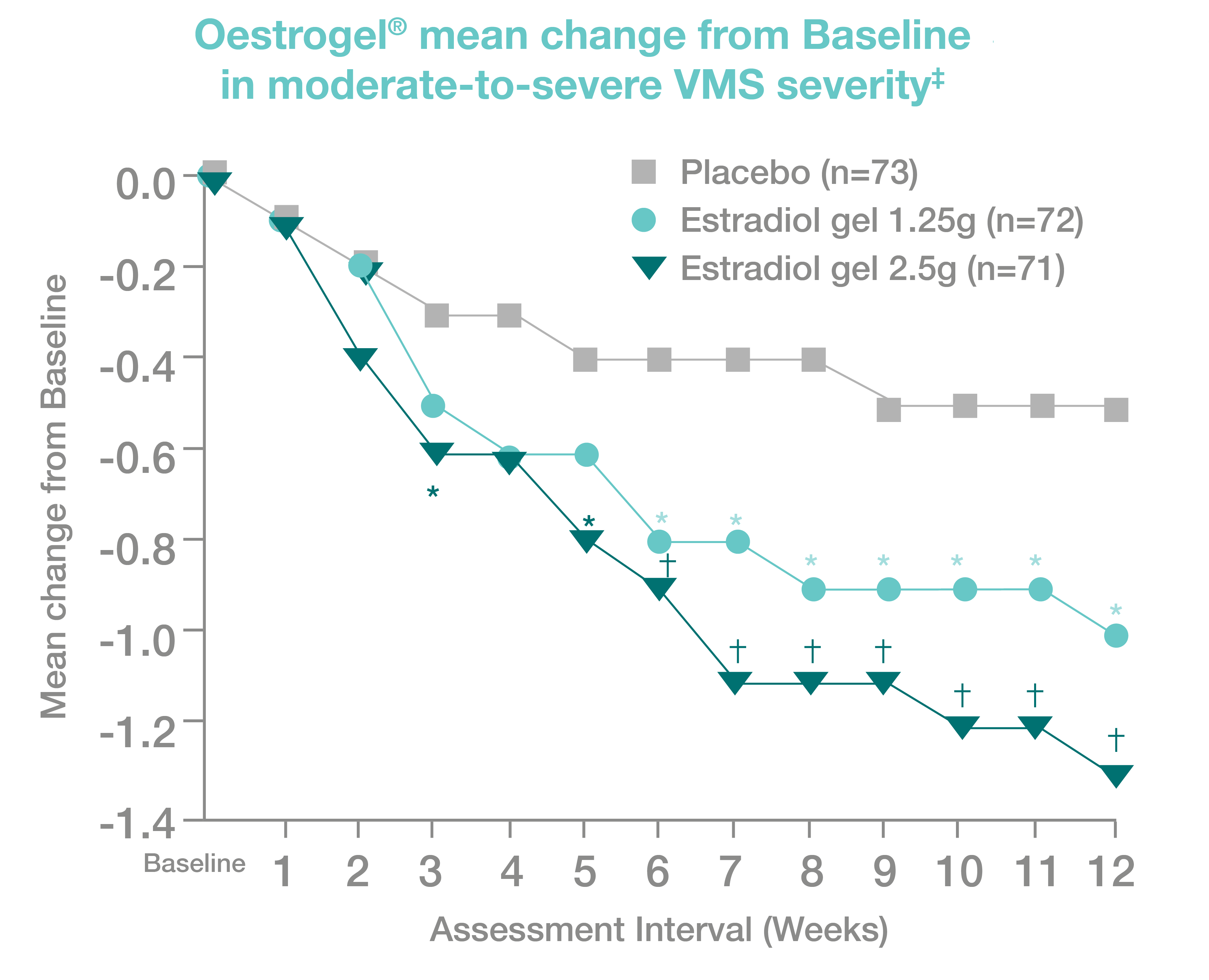
A 12-week, multicentre, double-blind, randomised, placebo-controlled study of the effects of Oestrogel in 221 postmenopausal women to assess the effects of a percutaneous 17B-estradiol gel on vasomotor symptoms (VMS) compared to placebo.
Inclusion criteria3
Participants were assigned to receive either 1.25g or 2.5g of percutaneous 17β-estradiol gel or placebo, applied once daily over a 12-week period to evaluate efficacy and tolerability.
Primary endpoint3
The mean change from baseline to Week 12 in the daily frequency of moderate-to-severe hot flushes.
Secondary endpoints3
Frequency and severity of all VMS and vaginal maturation index.
| Adverse event | Placebo (n=73) | 0.75mg Oestrogel (n=75) | 1.5mg Oestrogel (n=73) |
|---|---|---|---|
| Headache | 13 | 13 | 14 |
| Nausea | 3 | 4 | 9 |
| Breast pain | 7 | 8 | 8 |
| Infection | 5 | 12 | 5 |
| Pain | 8 | 5 | 4 |
| Vaginitis | 3 | 8 | 1 |
The most common adverse events were headache (18.1%), breast pain (10.4%), infection (10.0%), pain (7.7%), nausea (7.2%), rash (5.4%) and vaginitis (5.4%).3
Oestrogel was effective and generally well tolerated for alleviating moderate-to-severe hot flushes in postmenopausal women.3
Adverse event reporting
Adverse events should be reported. Reporting forms and information can be found at https://yellowcard.mhra.gov.uk/or search for MHRA Yellow Card in the Google Play or Apple App Store. Adverse events should also be reported to Besins Healthcare (UK) Ltd Drug Safety on 0203 862 0920 or Email: drugsafety@besins-healthcare.com