


Progesterone in Spontaneous Miscarriage - The PRISM trial


Study design1
The PRISM trial was a multicentre, randomised, double-blind, placebo-controlled study that assessed the use of vaginal progesterone 400mg compared with placebo.
Women (n=4,153) were randomly assigned to receive 400mg vaginal progesterone (n=2,079) or matching placebo (n=2,074) twice daily, from the time at which they presented with bleeding through 16 weeks of gestation.
Women were eligible for enrollment in the trial if they were 16 to 39 years of age, if they had completed less than 12 weeks of pregnancy, if they presented with vaginal bleeding, and if they had an intrauterine gestational sac that was visible on ultrasonography.
Primary endpoint
Birth of a liveborn baby after at least 34 completed weeks of gestation.

Results1
The primary endpoint — incidence of live births after at least 34 weeks of gestation — was not met
The percentage of women with available data for the primary outcome was 97% (4038 of 4153 women). The incidence of live births after at least 34 weeks of gestation was 75% (1513 of 2025 women) in the progesterone group and 72% (1459 of 2013 women) in the placebo group (relative rate, 1.03; 95% confidence interval [CI], 1.00 to 1.07; P = 0.08).
Post hoc sub-group analysis1
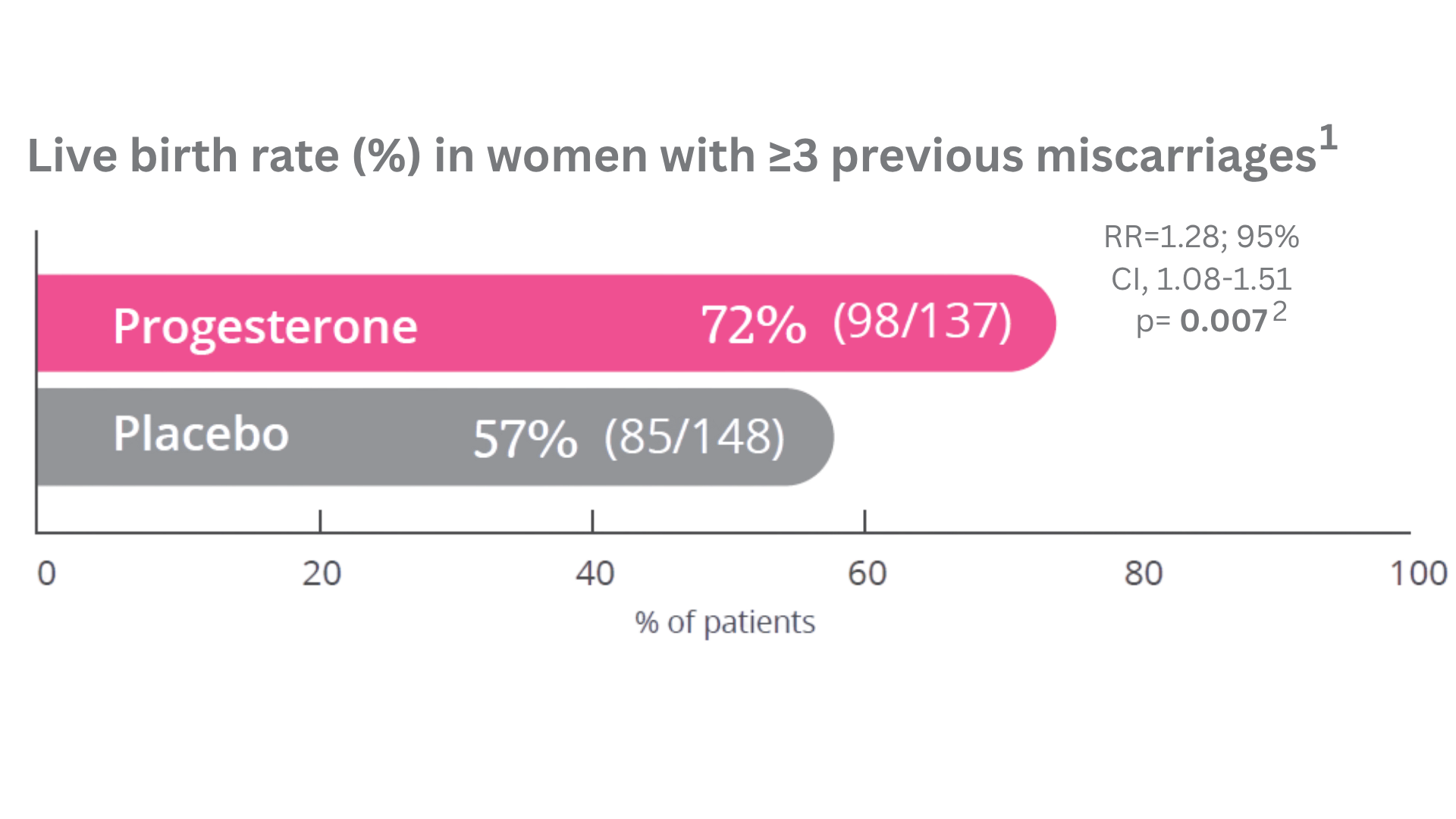
In a pre-planned post hoc sub-group analysis, vaginal progesterone capsules showed a 28% relative increase in live birth rate compared to placebo (with an absolute increase of 15%) in women with ≥3 previous miscarriages.
Live birth rate was 72% (n=98) for progesterone compared with 57% (n=85) for placebo.
Safety data1
There were no significant differences between treatment groups in the percentage of participants who had either a maternal or neonatal serious adverse event – 5% (n=105) in the progesterone group and 5% (n=98) in the placebo group.


References
- Coomarasamy A, et al. N Engl J Med 2019;380:1815-24
- Prometrium 400mg soft vaginal capsules Summary of Product Characteristics. Available at:
https://www.medicines.org.uk/emc/product/16016/smpc. Accessed June 2026
Adverse event reporting
Adverse events should be reported. Reporting forms and information can be found at https://yellowcard.mhra.gov.uk/or search for MHRA Yellow Card in the Google Play or Apple App Store. Adverse events should also be reported to Besins Healthcare (UK) Ltd Drug Safety on 0203 862 0920 or Email: drugsafety@besins-healthcare.com